How to Choose the Right Kitchen Cabinet Finish for Mackay's Climate
If you've ever watched a timber door warp mid-summer or noticed a cabinet finish peeling after a wet season, you already know that not every material handles heat and humidity equally. In a tropical Queensland environment, the finish on your kitchen cabinets isn't just an aesthetic decision — it's a practical one that shapes how long your kitchen looks and performs. Here's what to know before you commit.
Why Finish Choice Matters More Than You Think
Most people spend the bulk of their renovation planning door styles, colours and layout — and the finish tends to come later, almost as an afterthought. But the finish is what your kitchen wears every single day: steam from the stove, oil splatter, condensation from the fridge and general wear from a busy household.
In a tropical climate, that daily wear is compounded by conditions many southern homeowners simply don't contend with. A finish that performs beautifully in a showroom may behave completely differently after a few wet seasons. That gap between showroom performance and real-world durability is exactly why finish selection deserves careful thought.
Understanding the Main Finish Types
There are four finishes you'll commonly encounter when speaking with a kitchen cabinet maker: polyurethane, laminate, timber veneer and two-pack. Each has a different composition and each responds to heat and humidity in its own way.
- Polyurethane is a spray-applied coating over MDF or timber, flexible enough to expand & contract with temperature changes
- Laminate is a manufactured sheet product bonded to a substrate — consistent, affordable & available in a wide range of colours & textures
- Timber veneer is a thin slice of real timber applied to an engineered substrate, giving the warmth of natural wood with better dimensional stability.
- Two-pack polyurethane is a harder version mixed with a chemical hardener, producing a glass-like finish popular in contemporary kitchens.
How Heat & Humidity Affect Each Finish
Laminate is generally one of the more resistant options in humid conditions — its non-porous surface doesn't absorb moisture and quality products handle temperature variation without delaminating. Cheaper laminate on a poorly prepared substrate can still lift at edges if moisture gets in through unsealed joins.
Two-pack finishes are hardwearing and resistant to everyday moisture, but once chipped, they're harder to repair without it showing. Timber veneer requires careful sealing and is best kept away from direct moisture exposure. Polyurethane sits in the middle — flexible, reasonably moisture resistant and easier to repair than two-pack.
Key things to ask your cabinet maker:
- What substrate is being used beneath the finish?
- How are edges & joins sealed?
- What maintenance is recommended for humid conditions?.
Laminate: The Practical Workhorse
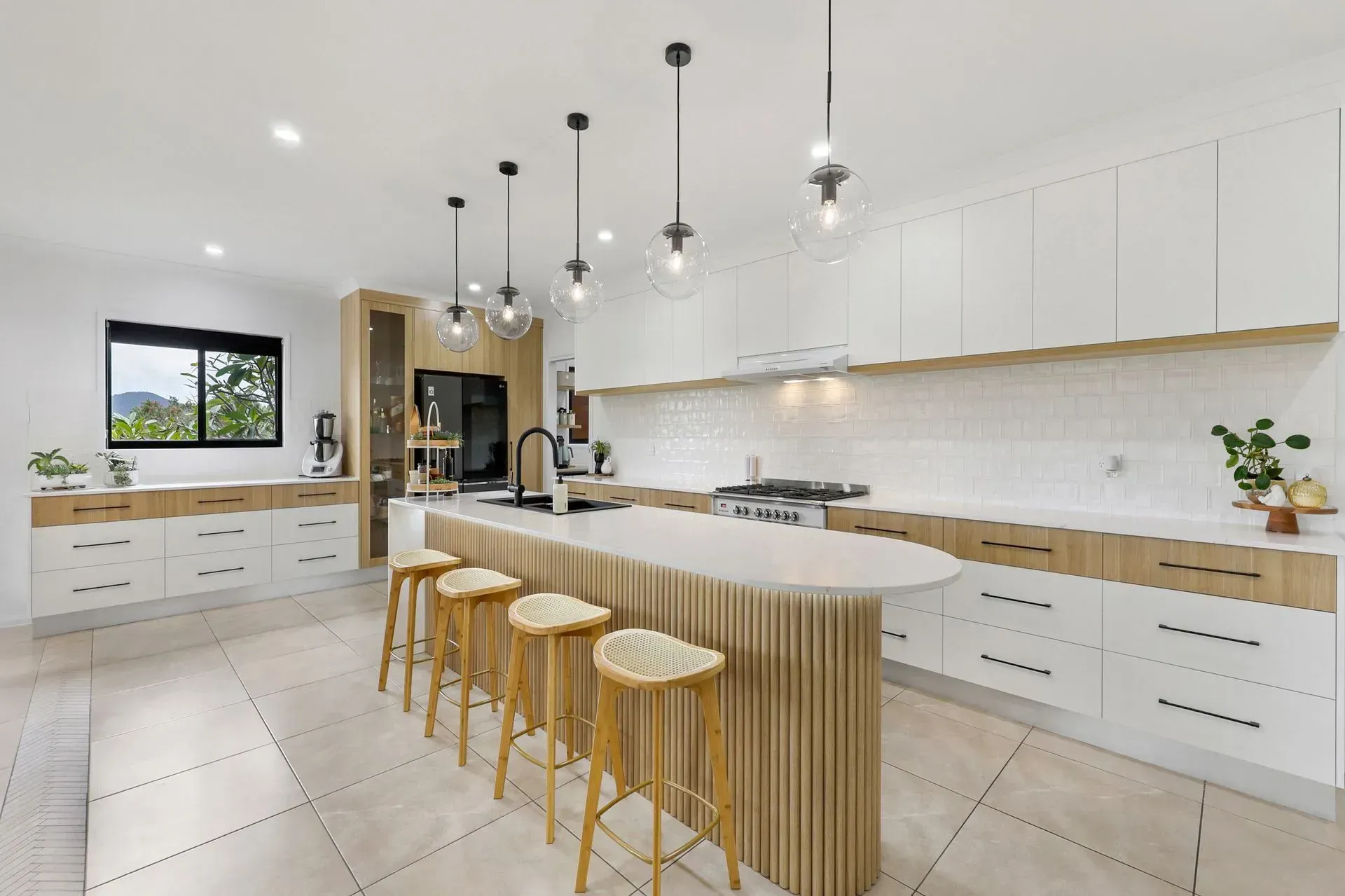
Laminate often gets dismissed as the budget option, but that reputation undersells what modern laminate delivers. High-pressure laminate (HPL) is genuinely tough — resistant to scratches, impact, heat and moisture, which makes it well suited to kitchens that see heavy daily use. It also comes in a wide range of contemporary finishes: matte, gloss, woodgrain, stone-look and textured options are all available. For families with young children or kitchens that see constant activity, laminate custom kitchen cabinets are worth considering seriously.
Two-Pack Finishes: The Premium Painted Look
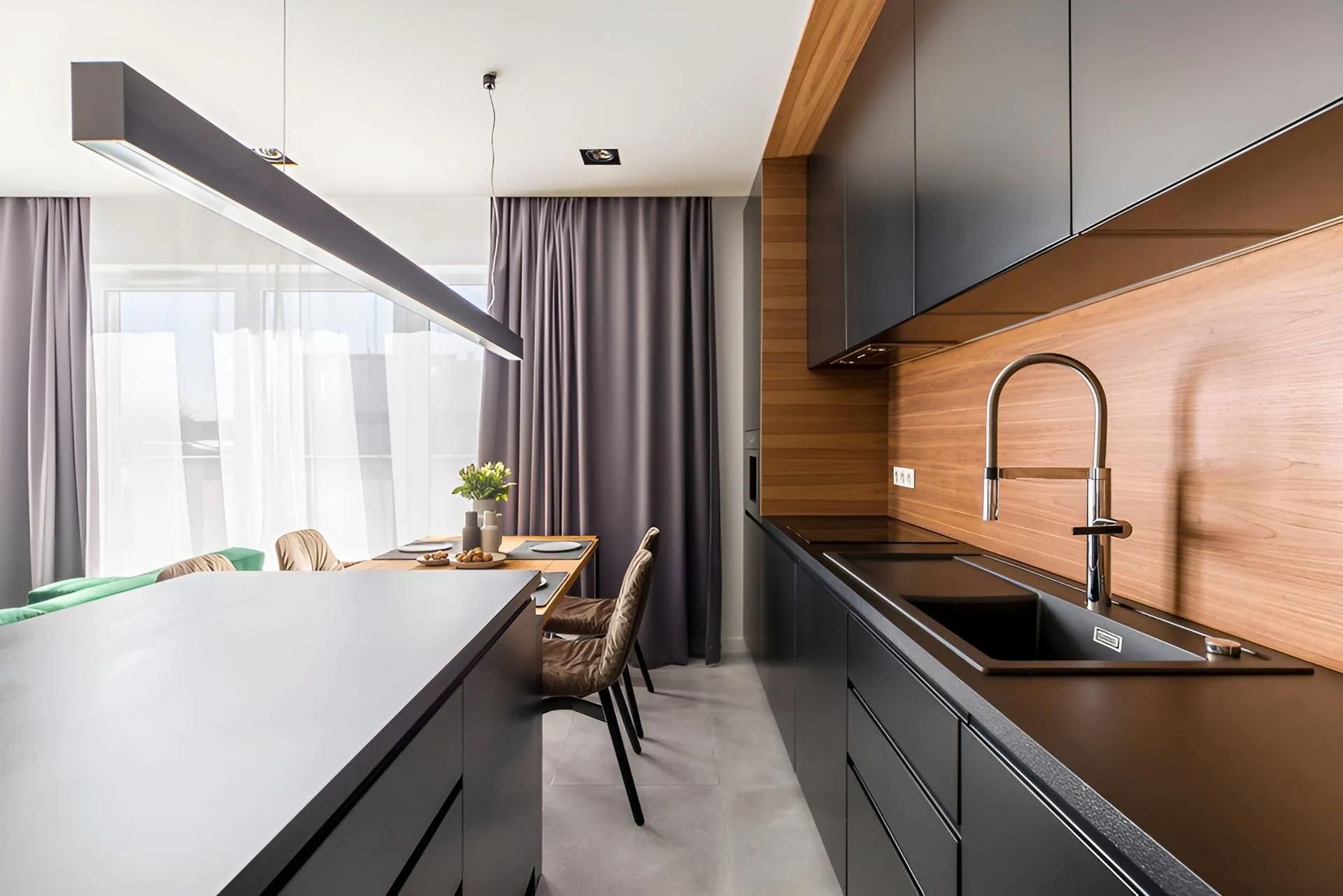
Two-pack polyurethane is the go-to finish for homeowners who want a crisp, contemporary kitchen with a smooth painted appearance. It's harder than standard polyurethane, more resistant to staining and looks sharp from day one.
The tradeoffs are cost and repairability — it sits at the higher end of the price range and damage is harder to fix invisibly. In kitchens with good ventilation and stable indoor temperatures, two-pack performs well for many years. Where humidity is persistently high without airflow, it's worth discussing substrate preparation with your cabinet maker first.
Timber Veneer: Natural Character With a Caveat
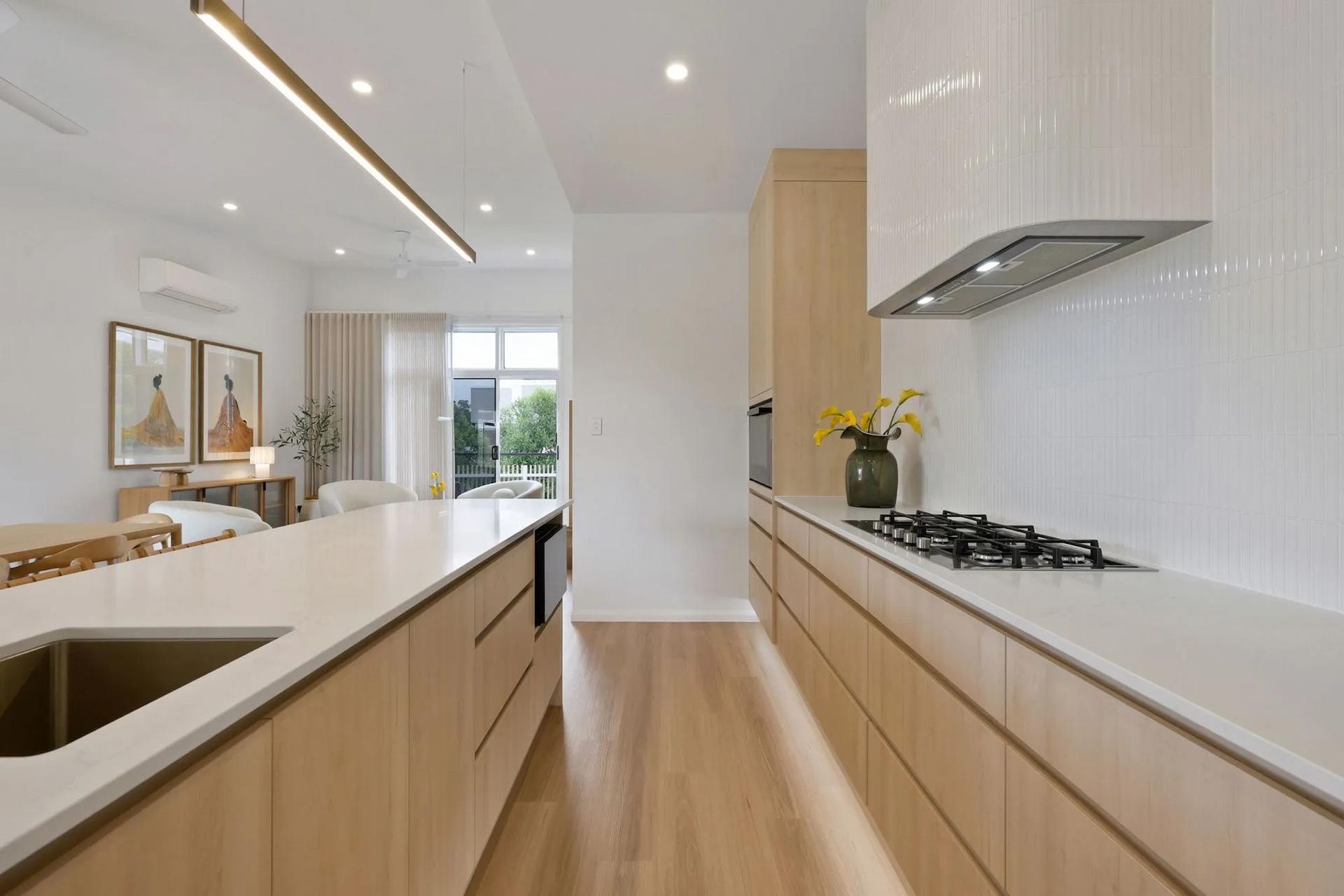
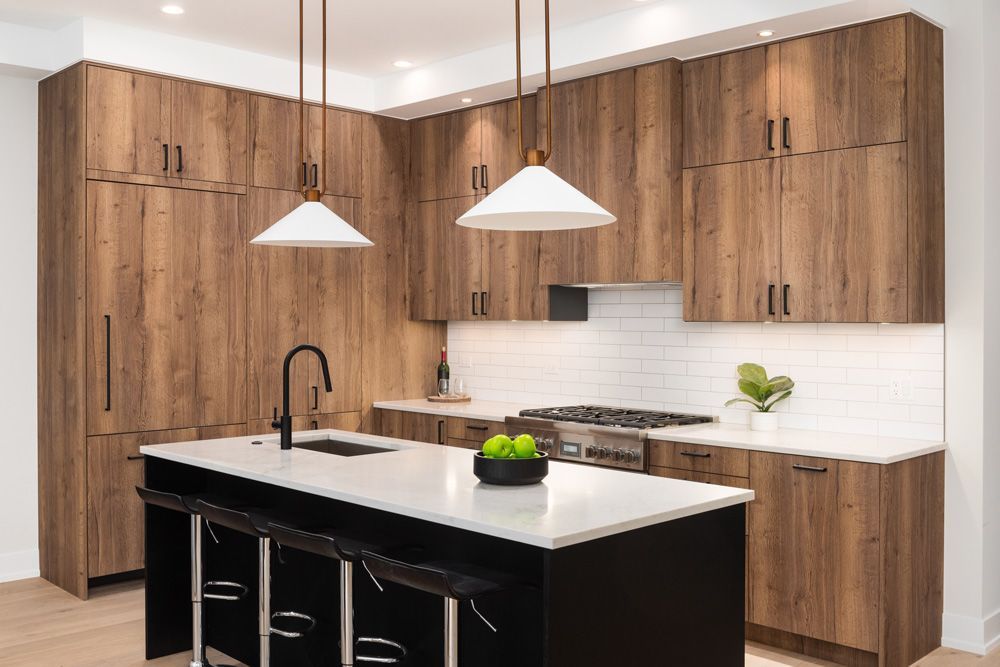
Timber veneer offers something laminate and two-pack can't — genuine natural grain variation, warmth and depth that shifts subtly with the light. It's popular for kitchen cabinet finishes that lean into a coastal, relaxed or Hamptons-inspired aesthetic.
The caveat is maintenance: timber veneer isn't set-and-forget. It needs to be properly sealed at installation, kept away from sustained moisture and periodically re-coated. In open-plan spaces where steam isn't lingering, veneer can be a stunning and durable choice — particularly when built on an engineered board substrate.
Colour, Sheen & Practical Upkeep
Beyond material type — colour and sheen level affect how the kitchen holds up day to day. High-gloss finishes show fingerprints and water marks more readily than matte or satin options — in a busy household, that means significantly more wiping down. Darker colours can highlight dust, while very light finishes may show cooking residue or scuffs more clearly.
It's worth honestly considering how much maintenance you're willing to do, because a finish you love on day one but find frustrating to maintain by month six isn't the right choice — regardless of how it looks.
Questions to Ask Before You Decide
Before finalising your kitchen cabinet finishes, have a direct conversation with your cabinet maker. A good maker will answer these questions clearly and help you weigh the tradeoffs for your specific kitchen:
- What finishes have performed well in similar builds?
- How is the substrate prepared before the finish is applied?
- What warranty applies & what does it cover?
- Are there options that balance aesthetics with durability for your kitchen use?
Working With a Cabinet Maker Who Knows the Conditions
There's a meaningful difference between a cabinet maker who works from a catalogue and one who builds custom kitchen cabinets with genuine knowledge of how materials perform locally. One sells you a finish that looks great on paper. The other tells you what's held up in real builds and what they'd put in their own home. When you're investing in a kitchen renovation, that kind of practical knowledge is worth a great deal.
Ready to Talk Through Your Options?
We at City Cabinetmakers work with homeowners navigating exactly these decisions — finding the right balance between a kitchen that looks the way they've always imagined and one that holds up to the real demands of tropical Queensland living. Whether you're dealing with a north-facing kitchen that heats up significantly through summer, a coastal property with salt air or simply a busy household that needs cabinetry built to last, we'll help you find a finish that suits both your aesthetic goals and the local conditions.
Get in touch with us today to discuss kitchen cabinets Mackay homeowners can count on for the long term.